- Written by: ogechi
- March 12, 2026
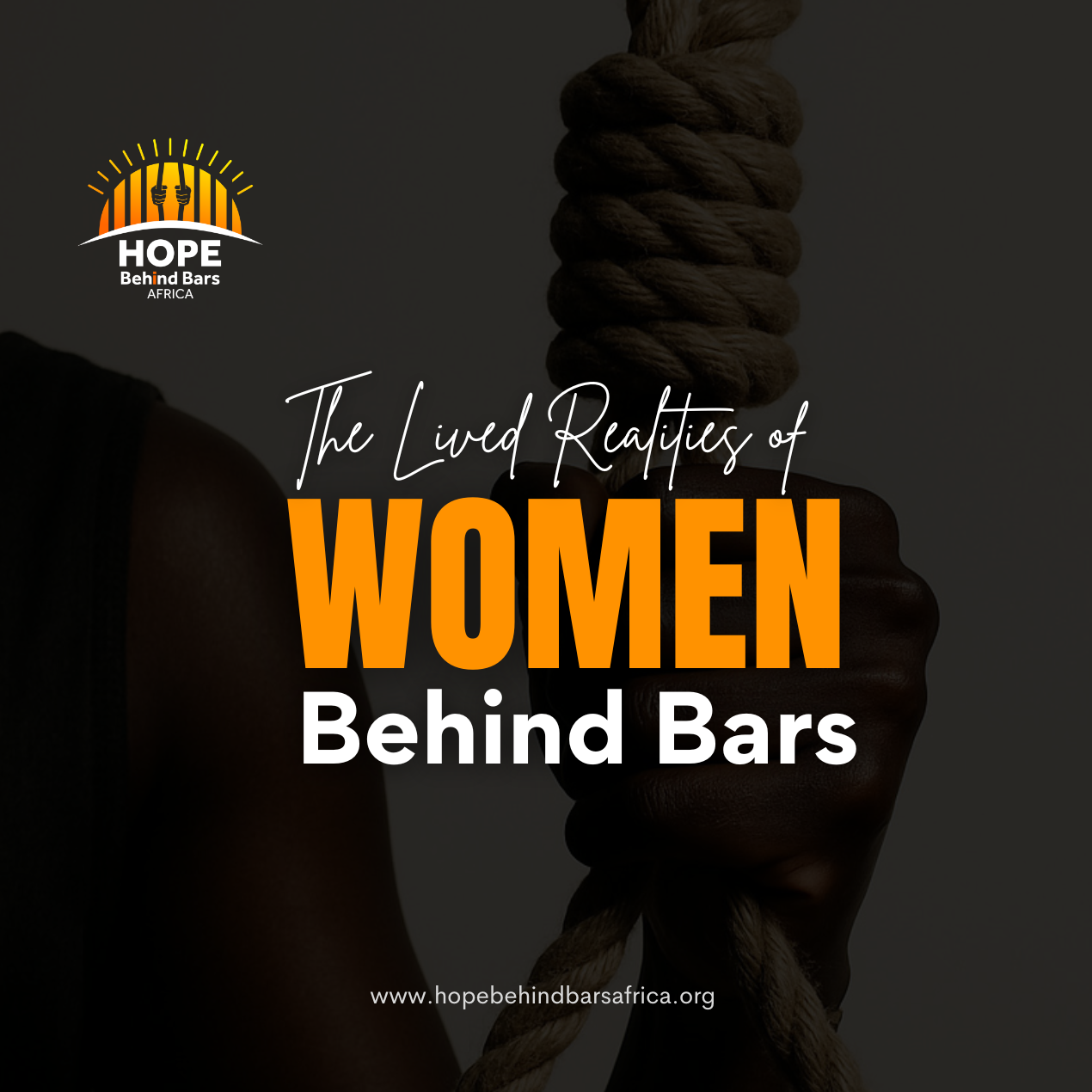
The lived realities of women behind bars in Nigeria
By Onaopemipo Adegbenga
When we think about incarceration, we often think in abstractions: numbers, categories, legal terms. Rarely do we pause to consider the human life behind a prison sentence, particularly when the person behind bars is a woman. This Women’s Month, it matters even more that we see her as a whole person, not a statistic but a life shaped by difficult circumstances , hardship, and resilience.
The Road to Custody Is Often Long and Unequal
For many women in Nigeria’s criminal justice system, arrest isn’t the beginning of hardship, it is the continuation of a lifetime of structural disadvantage. According to our report: Beyond Her Sentence: A Technical Analysis of Gender and Capital Punishment in Nigeria, 47% of women on death row are aged 18–35, and more than one-third had no formal education prior to their arrest. Only about 10% attained tertiary education.
These are women from low-income backgrounds, often working in informal sectors like trading, catering, hairdressing, or farming, sectors marked by economic precarity. Their pathways into the justice system are shaped by poverty, limited opportunity, and social vulnerabilities that the system rarely acknowledges.
Mothers Behind Bars: The Hidden Impact
A striking 70% of women on death row in Nigeria are mothers. This isn’t just a number, it’s a reflection of lives fractured by incarceration. These women have children whose education, emotional wellbeing, and stability are disrupted by the absence of a parent. Many children are left in fragmentary care arrangements, deepening the intergenerational cost of incarceration.
When a mother is sentenced, the consequences ripple outward: school attendance drops, psychological trauma increases for the children left behind, and family structures strain under the weight of loss. But these impacts rarely make it into formal conversations about justice reform, until now.
Law Without Understanding: A Justice Gap
The report found that 75% of women on death row did not understand the specific laws under which they were charged. Many lacked awareness of the legal processes, didn’t comprehend their rights, and had little or no legal guidance. More than half described their trials as non‑transparent, and 85% believed the law was applied unfairly to women.
This isn’t a minor procedural failure, it represents a justice gap that deepens inequality. When women do not understand the charges against them, when their trials feel opaque, the fairness of the legal process itself becomes questionable.
The Weight of Gender‑Based Violence
More than one-third of the women had survived gender‑based violence (GBV) such as domestic abuse, forced marriage, or child marriage prior to the offense that led to their sentence. In some cases, these histories intersect directly with the acts they were accused of committing.
These are not crimes abstracted from context, they are acts rooted in coercion, vulnerability, and survival. Yet the system often treats them as isolated criminal cases rather than outcomes of deeper social and gender inequities.
Stigma, Abandonment, and Social Isolation
Beyond legal challenges, women on death row face intense stigma. Many are abandoned by spouses and rejected by their communities, especially in cases involving accusations like adultery or sexual offenses. Stigma compounds the emotional strain of incarceration, making it harder for women to envision life beyond prison or reintegration with their families.
Belief in Rehabilitation — A Surprising Finding
Despite facing death sentences and systemic neglect, over 80% of the women interviewed expressed belief in rehabilitation and preferred restorative justice approaches such as vocational training or long‑term imprisonment to execution. This preference, in the face of overwhelming adversity, speaks to women’s resilience, agency, and hope.
What This Means for Justice Reform
Beyond Her Sentence doesn’t simply catalog injustices, it proposes actionable change.
The report calls for:
- – Gender‑sensitive legal reforms to ensure women understand charges and their rights.
- – A moratorium on executions as a step toward abolition of the death penalty.
- – Improved access to legal aid and psychological support for female inmates.
- – Expanded education and awareness campaigns to address violence, child marriage, and economic dependency that predispose women to criminalisation.
The report emphasizes that women on death row are not criminals in isolation, they are products of systemic inequality, cultural norms, and socio‑economic hardship.
This Women’s Month, as we celebrate women’s resilience, we must also confront the systems that too often fail them. These women are not statistics on paper. They were never just case numbers, and our justice system must reflect that truth. By listening to their experiences, learning from this research, and pushing for gender‑responsive reforms, we can take concrete steps toward a justice system that truly serves all Nigerians.