
- Written by: ogechi
- April 20, 2026
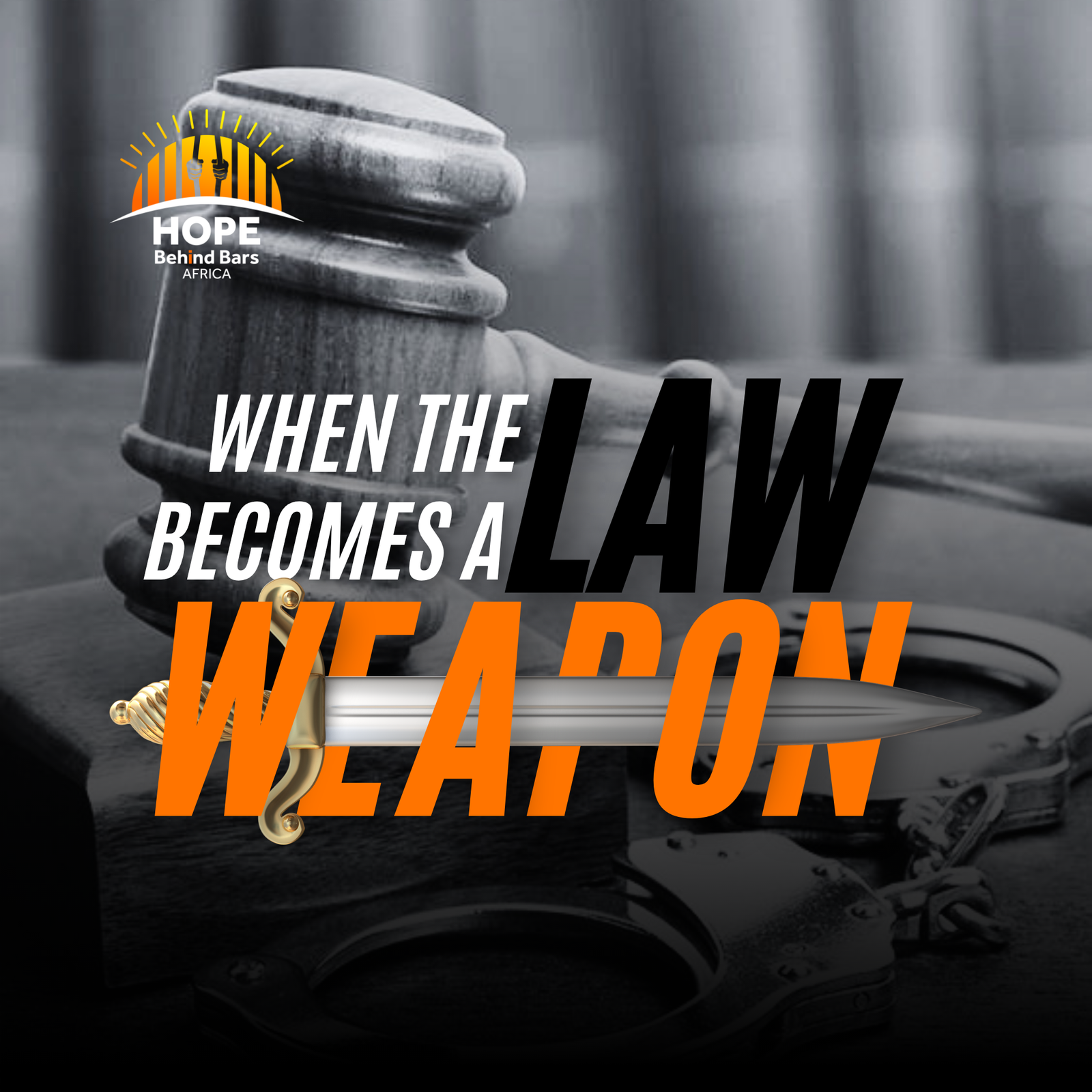
When the law becomes a weapon
By Onaopemipo Adegbenga
When the Law Becomes a Weapon
Across Nigeria’s civic space, a pattern is emerging that deserves closer attention. Increasingly, legal and quasi-legal processes are being used in ways that extend beyond their intended purpose, creating sustained pressure on individuals engaged in public interest work.
These cases often begin with actions that fall squarely within democratic participation: reporting corruption, questioning public policy, or carrying out journalistic duties. The response, however, is frequently legal.
This dynamic is characteristic of Strategic Lawsuits Against Public Participation (SLAPPs).
Understanding the SLAPP dynamic
A SLAPP is not primarily designed to succeed on legal merit. Its effectiveness lies in the process itself.
Individuals targeted by these actions are drawn into prolonged litigation, repeated court appearances, financial and psychological strain, and reputational risk. Even where cases are dismissed or weakened, the cumulative effect can be significant, creating a deterrent environment for civic engagement.
A Case in Focus
The experience of Mubarak Bello provides a clear illustration of this dynamic.
In 2019, he reported an alleged ghost workers scheme within the Katsina State Police Command to relevant authorities. Rather than triggering accountability processes, this action was followed by a series of legal proceedings directed at him.
For over six years, he has remained engaged with the legal system through arrest, detention, and repeated court processes. In at least one instance, charges were struck out for lack of evidence, yet subsequent proceedings were initiated.
This pattern highlights a critical concern: the persistence of legal pressure even in situations where claims are not sustained.
A Broader Trend
While each case differs in detail, similar dynamics have been observed in other instances.
In 2025, Hope Behind Bars Africa intervened in cases involving individuals such as Abubakar Isah Mokwa and Sodiq Atanda, both of whom were detained in contexts related to public expression or professional activity and were later released.
These examples reinforce a broader pattern in which legal and institutional mechanisms are used in ways that place pressure on civic actors, regardless of eventual legal outcomes.
Implications for Civic Space
The cumulative effect of such cases extends beyond the individuals directly involved.
Journalists may begin to exercise greater caution in investigative reporting, citizens may limit public expression, and civil society organisations may be forced to divert resources toward legal defence rather than service delivery. Over time, this contributes to a contraction of civic space, not only through formal restrictions but through sustained deterrence.
Policy Considerations
Addressing Strategic Lawsuits Against Public Participation requires both legal reform and stronger institutional safeguards to prevent the misuse of legal processes against civic actors.
A key step is the introduction of anti-SLAPP mechanisms that would enable courts to identify and dismiss abusive cases early, before prolonged litigation creates undue pressure on defendants.
Existing laws, particularly the Cybercrimes Act, also require review to ensure they are not applied in ways that restrict lawful expression or civic participation.
In March, we participated in the public hearing on the Human Rights Defenders Bill, contributing insights from our work on access to justice and civic protection. The Bill offers an important opportunity to formalise protections for human rights defenders, strengthen access to remedies, and reduce exposure to intimidation and abuse of power.
Alongside these reforms, accountability for the misuse of legal processes and the protection of judicial independence remain essential. Comparative experience from jurisdictions where anti-SLAPP frameworks or related procedural safeguards exist, including parts of North America and ongoing policy discussions in other common law systems, shows that targeted legal mechanisms can help reduce abusive litigation while preserving legitimate access to justice. These evolving models offer useful reference points for reform efforts in Nigeria.
The Role of Visibility and Documentation
One consistent factor influencing the trajectory of such cases is public visibility.
Sustained attention can shape how cases are handled, reduce the likelihood of prolonged proceedings, and provide a degree of protection for affected individuals. For ongoing cases such as that of Mubarak Bello, continued monitoring remains particularly important.
The Freedom Mic Podcast
To contribute to this visibility and documentation, Hope Behind Bars Africa is launching the Freedom Mic Podcast. The platform is designed to document lived experiences, analyse systemic patterns, and amplify voices across journalism, law, and civil society. By creating a consistent public record, the initiative aims to strengthen awareness and support evidence-based advocacy.
The first episode was released on YouTube on April 18.
A Shared Responsibility
Protecting civic space requires coordinated engagement across sectors.
We encourage stakeholders to follow developments in ongoing cases, engage with platforms that document these issues, and support efforts aimed at strengthening legal protections for civic actors. Because when legal systems begin to function as instruments of pressure rather than protection, the implications extend beyond individual cases to the broader democratic environment