
- Written by: ogechi
- July 30, 2026
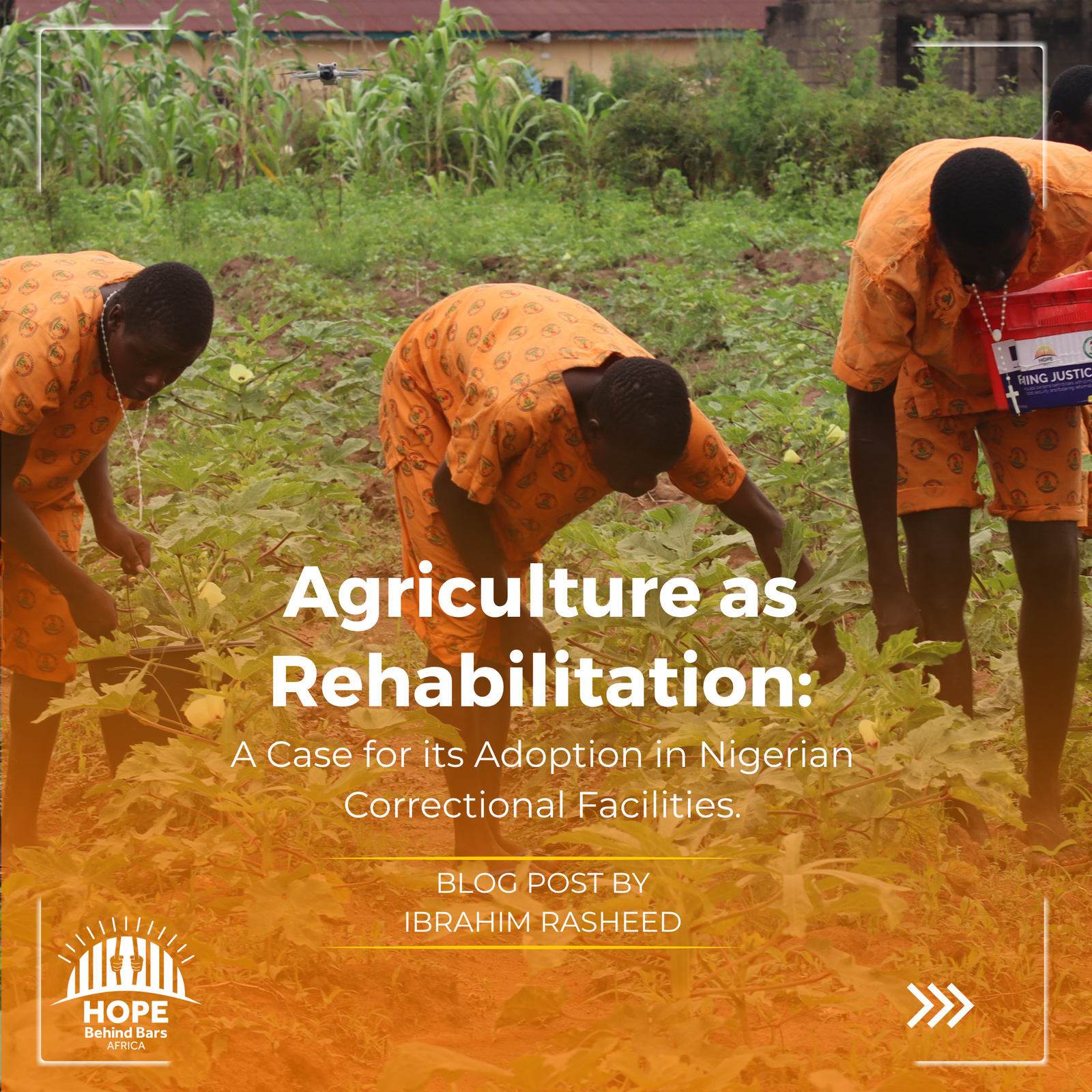
Agriculture as Rehabilitation: A Case for its Adoption in Nigerian Correctional Facilities.
By Ibrahim Rasheed
Working in the justice, rehabilitation and reintegration space, I have learnt very convincingly that meaningful change happens when people are given opportunities, not just punishment.
Through my involvement with Hope Behind Bars Africa (HBBA), I have seen firsthand how access to education, vocational training, mentorship, and psychosocial support can help incarcerated individuals rebuild their lives and have new dreams when they regain their freedom. Quite often, discussions about rehabilitation often focus on formal education and skills acquisition, but one area deserves great attention and that is agriculture.
Nigeria is an agricultural nation. At least, half of the population depend on farming and agribusiness for their livelihoods; yet the potential of agriculture as a rehabilitation tool within correctional facilities remains largely untapped.
Across different parts of the world, correctional farming programs have been used to provide incarcerated individuals with practical skills, structured routines, and opportunities to prepare for life after release. Although I have not personally visited and interacted with these referenced-facilities, their documented outcomes point to the reality that when people are given productive work and the chance to learn, rehabilitation becomes more effective.
Agriculture offers unique benefits, and as a farmer, I know this so well. It teaches patience, responsibility, discipline, and consistency.
Practical agricultural training equips individuals with skills that can be applied in farming, food processing, agribusiness, and other areas of the agricultural value chain. Particularly in Nigeria where many returning citizens face significant challenges finding employment after release, the opportunities created from these skills remain valuable long after they leave the correctional facilities.
I do not just make a case for crop production alone. I also consider the potentials of modern agriculture which includes greenhouse farming, poultry production, fish farming, irrigation systems, value addition, marketing, and agricultural entrepreneurship. These are areas that can create genuine economic opportunities for individuals seeking a fresh start.
As organizations, policymakers, and correctional authorities continue exploring innovative approaches to rehabilitation, agriculture deserves a center spot in the discussion. Beyond producing food, it can cultivate confidence, purpose, and self-reliance.
Rehabilitation is ultimately about preparing people for successful reintegration into society. When individuals leave correctional facilities with practical skills, renewed confidence, and a pathway to economic independence, communities become safer and stronger; and this is what justice means to me.
If you ask me, I will say that the greatest lesson agriculture offers is that growth takes time. With the right support, care, and opportunity, even the most challenging circumstances can produce remarkable outcomes. The same is true for people.